Food handler awareness
Personal hygiene, contamination routes, cleaning responsibilities and safe handling routines. Discussion can focus on the steps staff perform during receiving, preparation, storage and service.
Food Safety Training
Understand the knowledge areas that help food handlers, supervisors and quality teams turn written procedures into consistent daily practice.
Explore learning areas ↓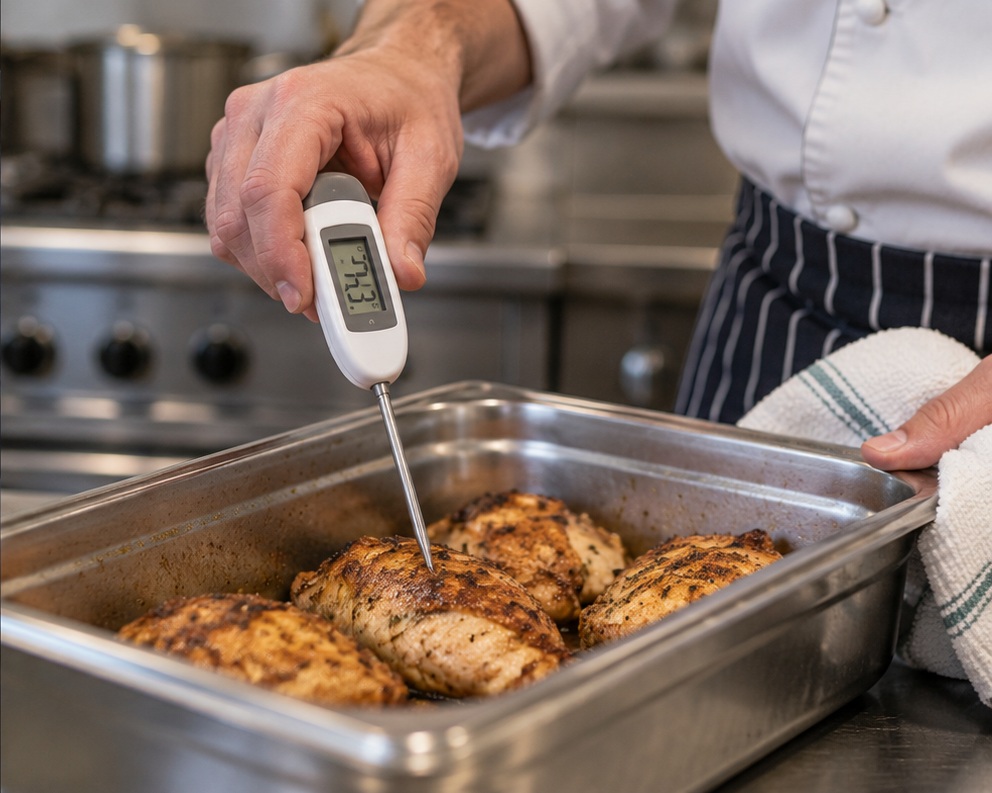
Training needs vary between a new food handler, a shift supervisor and a quality manager. A useful enquiry identifies the team’s responsibilities, food processes, existing knowledge and the practical issues they need to address.
This page explains training subject areas. It does not confirm that Hams Al Sabeel currently offers a particular course. Availability, provider, trainer credentials, delivery format, language, dates, fees and any assessment or recognised qualification must be confirmed in writing. No approval, accreditation, partnership or certificate entitlement is represented here.
Use these topics to describe your team’s needs. They are information categories, not an available course catalogue.
Personal hygiene, contamination routes, cleaning responsibilities and safe handling routines. Discussion can focus on the steps staff perform during receiving, preparation, storage and service.
Selecting the correct instrument, taking consistent readings, understanding calibration status and recording observations. Staff should follow site procedures when a reading is outside the agreed limit.
Clear shift responsibilities, review of monitoring records, escalation of concerns and follow-up of corrective actions. Any designated Person in Charge requirement or recognised qualification needs separate confirmation.
An introduction to identifying food safety hazards, reviewing control measures, monitoring, corrective action and record keeping. A training discussion does not amount to a validated HACCP plan or certification.
How documented responsibilities, communication and review can support a structured food safety approach. ISO 22000 awareness may be a topic for discussion; no approved course or management-system certification is implied.
Recognising ingredients that may present allergen risks, preventing unintended cross-contact and communicating accurate information through site procedures and supplier records.
Describe the operational need first. The appropriate level, format and any assessment can then be discussed without assuming that a particular programme is available.
Discuss training requirements ↗No. Calibration assesses instrument measurement performance. Training addresses how people work, monitor conditions, use instruments and respond to issues. Both can support an organisation’s procedures.
No course booking or training certificate is offered through this page or the shop. Confirm any programme, provider, assessment and recognition directly before making arrangements.
No. A general information page cannot establish whether a facility or individual meets a particular requirement. Discuss the relevant authority, role and evidence needed with the appropriate provider or adviser.