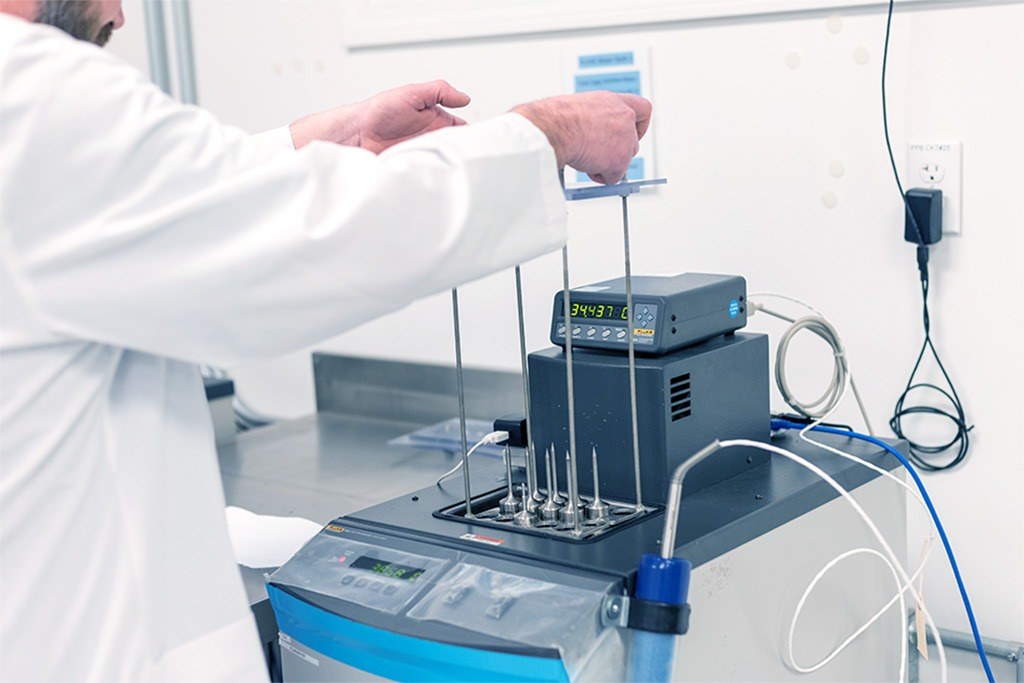
At Hams Al Sabeel Laboratory, calibration is carried out through a structured and controlled process.
1. Equipment Identification
- Relevant equipment information is recorded, such as:
- Equipment type
- Manufacturer
- Model
- Serial number
- Identification number
- Measurement range
- Equipment location
2. Equipment Inspection
The equipment is checked for visible damage, general condition and suitability for calibration.
Where applicable, probes, sensors, displays, connections and other relevant components are inspected.
3. Calibration Testing
The equipment reading is compared with an appropriate reference standard under defined conditions.
Depending on the equipment and applicable calibration procedure, measurements may be taken at one or more points across the required range.
4. Results Recording
Observed readings and relevant deviations are recorded.
5. Evaluation
Results are evaluated against applicable acceptance criteria or agreed requirements.
6. Calibration Documentation
Appropriate calibration documentation is issued following completion of the service.
7. Calibration Identification
Where applicable, a calibration label or sticker can be provided to identify calibration status and relevant date information.
- Calibration Certificates & Documentation
Documentation is an important part of an effective calibration programme.
Following calibration, appropriate documentation can be maintained as part of your establishment's food safety, quality and equipment control records.
- A calibration certificate may contain information such as:
- Customer / facility name
- Equipment description
- Equipment identification
- Manufacturer
- Model
- Serial number
- Calibration date
- Calibration location
- Measurement range
- Reference standard
- Test points
- Observed readings
- Calibration results
- Acceptance criteria
- Calibration status
- Next calibration due date, where applicable
- Authorized personnel details
Our documentation helps businesses maintain organized calibration records and demonstrate appropriate control of measuring equipment.
Supporting food safety systems
Calibration supports measurement control and HACCP-based systems. It does not itself constitute HACCP certification or regulatory approval.